CN
CNPhone:
19951065399
WHAT ARE YOU LOOKING FOR?
Selecting the ideal heating infrastructure for an automotive or industrial paint shop is a critical operational decision. The choice between a diesel heating spray booth and an electric configuration impacts not only the initial capital investment but also long-term utility overhead, cycle times, and environmental compliance. As global energy markets fluctuate and environmental regulations tighten, facility managers searching for the perfect electric / diesel burner spray booth solution must carefully weigh the mechanical efficiencies, throughput capabilities, and structural life-cycle expenses of both thermal deployment models to optimize their production efficiency.
To accurately evaluate heating options, it is essential to look at the mechanical engineering driving each independent system. A traditional diesel heating spray booth relies entirely on liquid-fuel combustion. The system utilizes a dedicated burner to ignite diesel oil, pulling air across a heavy-duty stainless steel heat exchanger. The air absorbs thermal energy through conduction before a high-volume ventilation system circulates it evenly through the cabin. When sourcing an electric / diesel burner spray booth, this fuel-based setup represents the industry standard for raw thermal power and rapid air heating.
Conversely, a pure electric heated spray booth bypasses combustible fuel altogether, utilizing high-density electric resistance elements or short-wave infrared (IR) lamps. Air is heated directly as it passes over the energized elements, or in the case of infrared, radiant energy directly excites the molecules within the paint coating itself. Because there is no open flame or combustion byproduct, electric configurations eliminate the need for a complex exhaust heat exchanger, working with a simplified internal duct layout that delivers immediate, responsive thermal transfers.
The primary reason industrial operations continue to rely on a diesel heating spray booth is its raw thermal capacity. Diesel fuel possesses an exceptionally high energy density, allowing a standard burner to rapidly generate hundreds of thousands of BTUs.
Advantages of Diesel Heating:
Rapid Heat-Up Cycles: Exceptionally fast temperature ramp-up, ideal for heavy-duty commercial truck or aircraft applications.
Grid Independence: Bypasses electrical grid constraints, making it perfect for facilities with restricted amp capacity.
Cost Efficiency: Highly cost-effective in regions with high industrial electricity rates.
Disadvantages of Diesel Heating:
Higher Maintenance: Requires frequent burner nozzle cleaning, fuel filter replacements, and regular heat exchanger crack inspections.
Fuel Logistics: Demands dedicated on-site fuel storage tanks and introduces exposure to volatile fuel pricing.
Permitting Hurdles: Combustion produces local emissions, which may require stricter air-quality permitting.
Electric heating options have become increasingly popular for buyers browsing the electric / diesel burner spray booth market due to their precise temperature management and lower maintenance requirements. Without a burner or heat exchanger to service, an electric paint booth experiences minimal mechanical wear.
Advantages of Electric Heating:
Minimal Upkeep: Bypassing fuel combustion drastically reduces mechanical wear and operational downtime.
Precise Control: Holds exceptionally tight temperature tolerances for uniform curing across complex geometric profiles.
Zero Emissions: Produces no localized combustion emissions, simplifying compliance with strict eco-regulations.
Disadvantages of Electric Heating:
High Infrastructure Demand: Demands massive amperage, often requiring expensive three-phase facility power upgrades.
Slower Air Convection: Standard electric convective airflow takes longer to warm up massive ambient spaces compared to diesel.
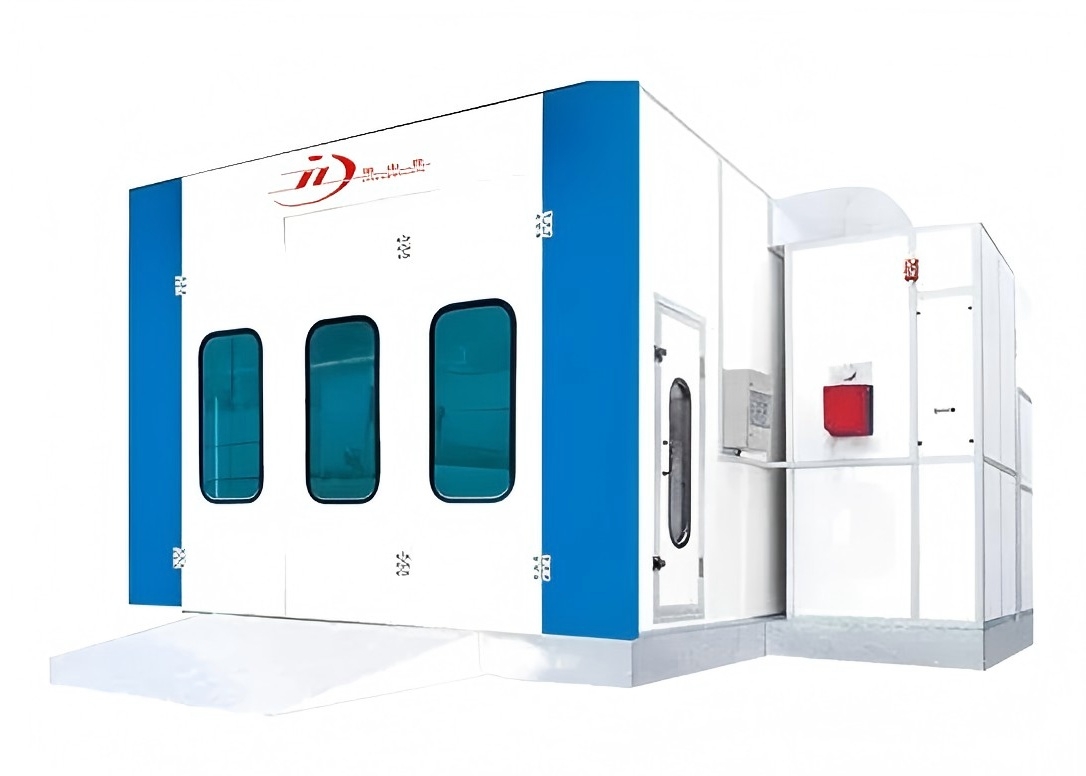
When evaluating long-term expenses, industrial operations investing in an electric / diesel burner spray booth framework must balance upfront capital investment against ongoing monthly utility bills. Generally, a pure diesel heating spray booth carries a lower initial purchase price because its heating and burner components are highly standardized and simple to scale. Pure electric systems, particularly those using advanced automated short-wave infrared arrays, typically require a higher initial equipment investment, along with any necessary facility grid modifications.
To illustrate how these factors balance out over time, the following comparison table details the typical resource allocation, performance metrics, and cost considerations for a standard mid-sized industrial setup:
| Performance & Financial Metrics | Diesel Heating Spray Booth | Electric Heated Spray Booth |
|---|---|---|
| Average Upfront Equipment Cost | Moderate (Standardized components) | Higher (Advanced element arrays) |
| Facility Infrastructure Needs | Fuel storage tanks, exhaust stack | Three-phase power, high amperage |
| Thermal Response & Ramp Time | Rapid (High energy density combustion) | Gradual convection / Instant localized IR |
| Preventative Maintenance Routine | High (Nozzle cleaning, heat exchanger checks) | Low (Periodic element inspections) |
| Environmental Permitting Hurdles | Higher | Minimal |
| Typical Life-Cycle Longevity | 10 to 15 Years | 15 to 20 Years |
Operational energy costs vary based on geographical location and regional utility rates. In areas where diesel fuel prices are high or electricity is heavily subsidized by green energy initiatives, electric booths provide a predictable, lower monthly overhead. Conversely, in regions facing steep industrial electricity rates or limited grid capacity, choosing a diesel heating spray booth from the available electric / diesel burner spray booth configurations remains the more cost-effective choice for maintaining high production throughput.
Choosing between these two thermal technologies ultimately depends on your specific production requirements, facility limitations, and regional energy pricing. If your facility manages high-volume throughput for large vehicles, heavy machinery, or aerospace components, a diesel heating spray booth offers the raw thermal power needed to maintain fast cycle times. It is also the ideal choice for facilities facing strict electrical supply limits where upgrading the local grid infrastructure would be cost-prohibitive.
If your facility prioritizes low maintenance, precise temperature control, and zero-emission operations, an electric heated booth is highly effective. This configuration is well-suited for high-precision manufacturing, composite materials coating, and urban cleanrooms where combustion exhaust stacks are restricted. For procurement teams reviewing electric / diesel burner spray booth options, evaluating your local grid capacity first will prevent unexpected installation bottlenecks and ensure you deploy a system that safely handles your daily production targets.
Listening to the long-term growth and production capacity needs of your business is the key to selecting a spray cabin heating system. Whether you pursue a diesel heating system for raw thermal efficiency or an electric configuration for environmental compliance and temperature control, both can maximize your return on investment when deployed in the correct application. When making your evaluation, it is highly recommended to look comprehensively at local energy pricing, compliance overhead, and required maintenance intervals to formulate the most strategic equipment procurement strategy.
As a premier manufacturer in the coating equipment sector, Jiangsu Jingzhongjing Industrial Painting Equipment Co., Ltd. (JingzhongJing Group) leverages over two decades of industry experience and a modern 120,000 square meter production facility. We are dedicated to designing highly efficient, green industrial custom lines and cutting-edge VOC treatment equipment for global clients. Contact our technical experts today to receive your specialized spray booth architectural blueprint and an accurate custom quote.
Yes. Conversion requires removing the diesel burner and heat exchanger, installing electric elements or infrared arrays, and rewriting control panel logic. You must also ensure your facility has sufficient three-phase power.
Electric booths require stable 380V to 480V three-phase electrical connections. Depending on the cabin size, the power demand typically ranges from 60 kW to over 150 kW.
No, but your routine depends on the configuration you choose. If you choose a diesel setup, the burner parts need maintenance every six months. If you choose an electric setup, the solid-state elements require very little upkeep and generally last 5 to 10 years.
Electric systems with short-wave infrared (IR) lamps are superior. IR energy penetrates the paint layer to dry it from the inside out, preventing surface skinning without needing high-volume air convection.
Only if poorly maintained. A sealed stainless steel heat exchanger keeps combustion exhaust completely separate from cabin airflow. Regular inspections are required to prevent cracks that cause leaks.